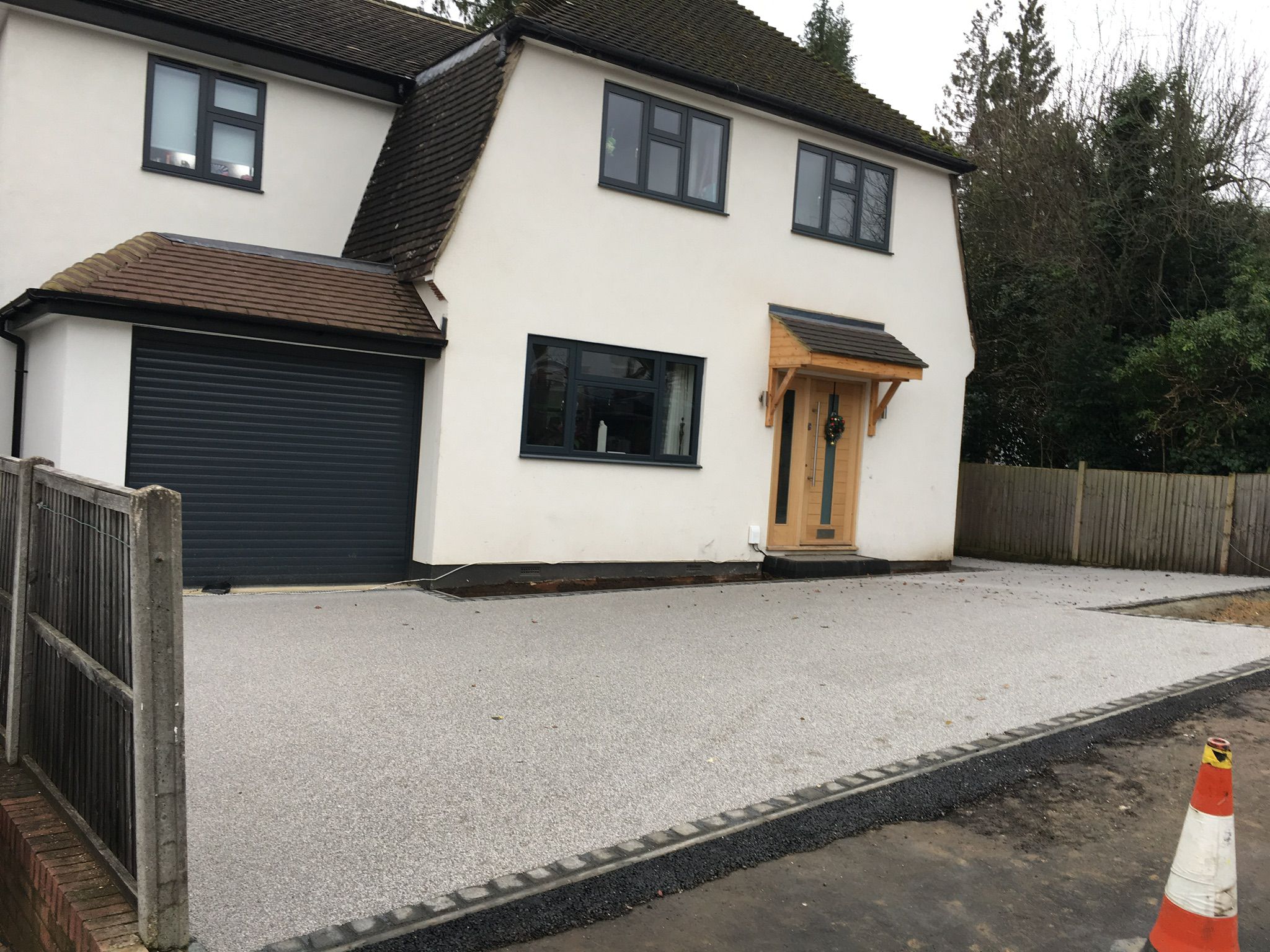
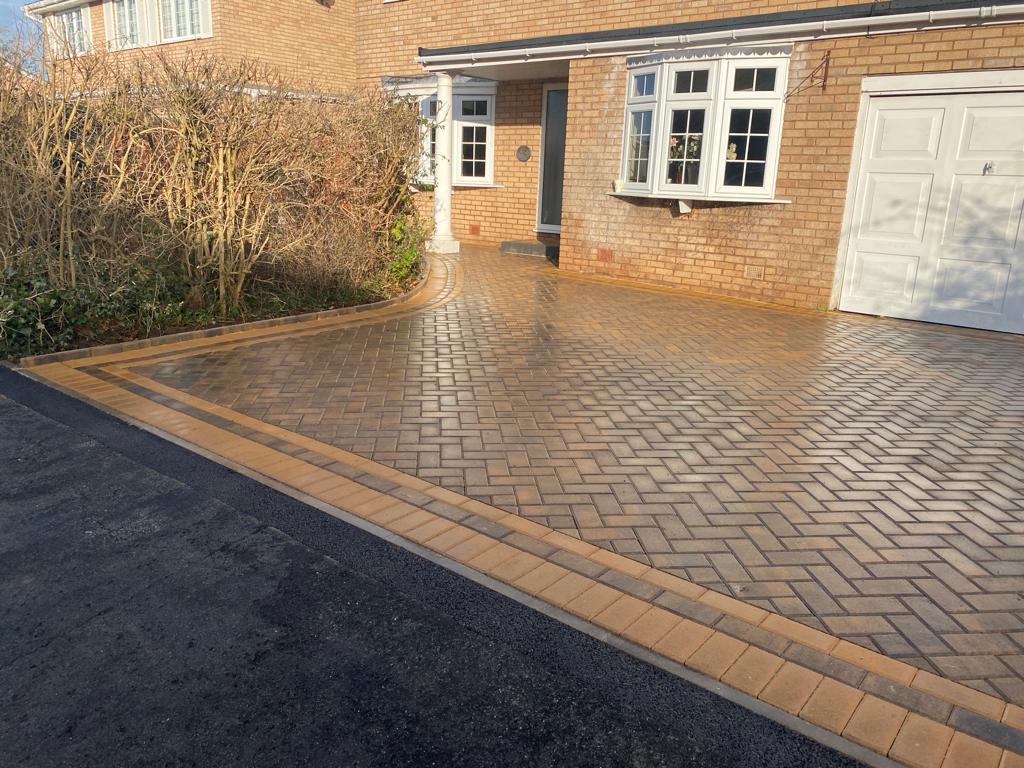
Block paving is exactly what it sounds like: individual concrete or clay blocks laid in patterns to create driveways, patios, and paths. It’s popular because it looks smart, lasts decades, and you can replace individual blocks if needed.
The blocks come in various sizes, colours, and finishes. Standard concrete blocks are cheapest, while clay pavers cost more but age better. Permeable blocks help with drainage and meet modern planning requirements.
How Block Paving Works
Proper block paving needs solid foundations. We excavate to the right depth, lay hardcore and sand bases, then place blocks in your chosen pattern. The whole surface gets compacted and sand brushed into joints.
The foundation work is crucial. Rush this part and you’ll get sinking, weeds, and loose blocks within years. Good contractors won’t cut corners here.
Advantages and Drawbacks
- Durable surface lasting 25+ years with minimal maintenance
- Individual blocks can be lifted for repairs or utility access
- Wide range of colours and patterns available
- Adds value to your property
- More expensive initially than tarmac or concrete
- Weeds can grow in joints without proper maintenance
- Cheaper installations may sink or shift over time
What to Expect
Expect to pay £60-£120 per square metre depending on block choice and site conditions. A typical driveway takes 3-5 days including excavation and base work.
When choosing contractors, look for established businesses with proven track records. Companies like Driveway Installers Chelmsford have built solid reputations in Chelmsford, Essex through consistent quality work.
Good block paving transforms your property’s appearance and provides decades of reliable service. Just make sure you choose experienced contractors who understand proper foundation work.